
Naugatuck House History Sources
A house-history search needs an era plan. Current deed and assessment sources are strongest for the recent ownership chain. Directory reels and newspapers can show a past household or subscriber. Maps and aerials show the place changing. Probate, vital records, and cemetery material can close a family-history lead. The sources overlap, but their columns are not interchangeable. For previous residents, the first note should say whether the source identifies an owner, an occupant, a subscriber, a relative, or only a place.
| Source | Years It Covers | Where Held | What It Shows |
|---|---|---|---|
| Naugatuck deed index and images | Index/images 1991-present; bridge books 1982-1990 | Town Clerk / SearchIQS | Recorded parties, dates, instruments, book/page, legal description |
| Naugatuck maps | 1854-present in SearchIQS coverage note | Town Clerk / online map index | Recorded maps and historical parcel context |
| Waterbury directory reels | 1928-1934; Naugatuck included | Library of Congress / NARA | Subscribers, names, addresses, business clues |
| Local history collections | Edition and holding dependent | Historical Society / Whittemore Library | Directories, yearbooks, newspapers, pictures, manuscripts |
| Probate and vital records | Event or case dependent | District 21 / Town Clerk / DPH | Death, family, estate, and eligibility-controlled clues |
Start with the address and date you know. Use a deed or parcel key for ownership, a directory or newspaper for a household lead, and a probate or vital source for a family event. A source that does not show occupants should not be made to answer that question.
Tracing Naugatuck Past Owners
Ownership and occupancy are different trails. A deed can show a grantor and grantee, recording date, instrument, book, page, legal description, and image link. The legal description can be more stable than a street name, especially when a road label or unit format changes. Use the recorded chain to establish transfer history, then use directories, newspapers, and family records for household clues. Previous residents research should keep those evidence types separate.
- Open the Naugatuck assessor or GIS record and write down the current owner field, location, MBL, account, and checked date.
- Search the owner as grantee in SearchIQS and identify the likely purchase deed by date, instrument, book, page, and description.
- Read the seller as grantor, then search that name as grantee to find the preceding conveyance.
- Repeat backward while recording every date and coverage seam, including the 1983-1990 index books and 1982-1991 images.
- Ask the Town Clerk about older books, certified copies, maps, or a legal description that cannot be confirmed online.
- Grantor
- The party conveying an interest in the recorded instrument.
- Grantee
- The party receiving the interest in that instrument.
- Chain of title
- A sequence of recorded transfers used to trace ownership over time.
- Legal description
- The recorded land description that can remain useful when a street label shifts.
- Criss-cross directory
- An address-oriented directory section that can move from a house to a listed name.
- Enumeration district
- A census geography used to organize households, not a modern parcel boundary.
Naugatuck SearchIQS Deed Trail
The Naugatuck SearchIQS route lets a researcher walk a deed chain when the current parcel owner is known. For previous residents, that chain supplies recorded-party clues rather than a complete household list. The coverage guide says the online land index and images begin 01/02/1991, grantor/grantee index books cover 1983-1990, record-book images bridge 12/30/1982 to 01/07/1991, and maps reach 04/26/1854. The chain can therefore move from a current screen to earlier books, but not through a single uniform interface.
The search screen offers Party 1 and Party 2, individual last and first names, partial names, wildcard asterisk, date range, document group, description, town, book/page, instrument number, and case number. A captured image price was $2 per image. No Naugatuck-specific certified-copy price was located, so ask the Town Clerk for the current copy route. A previous residents trail begins with the parcel and works backward through the index.
See the SearchIQS search-screen guide before choosing the index fields represented by this capture.
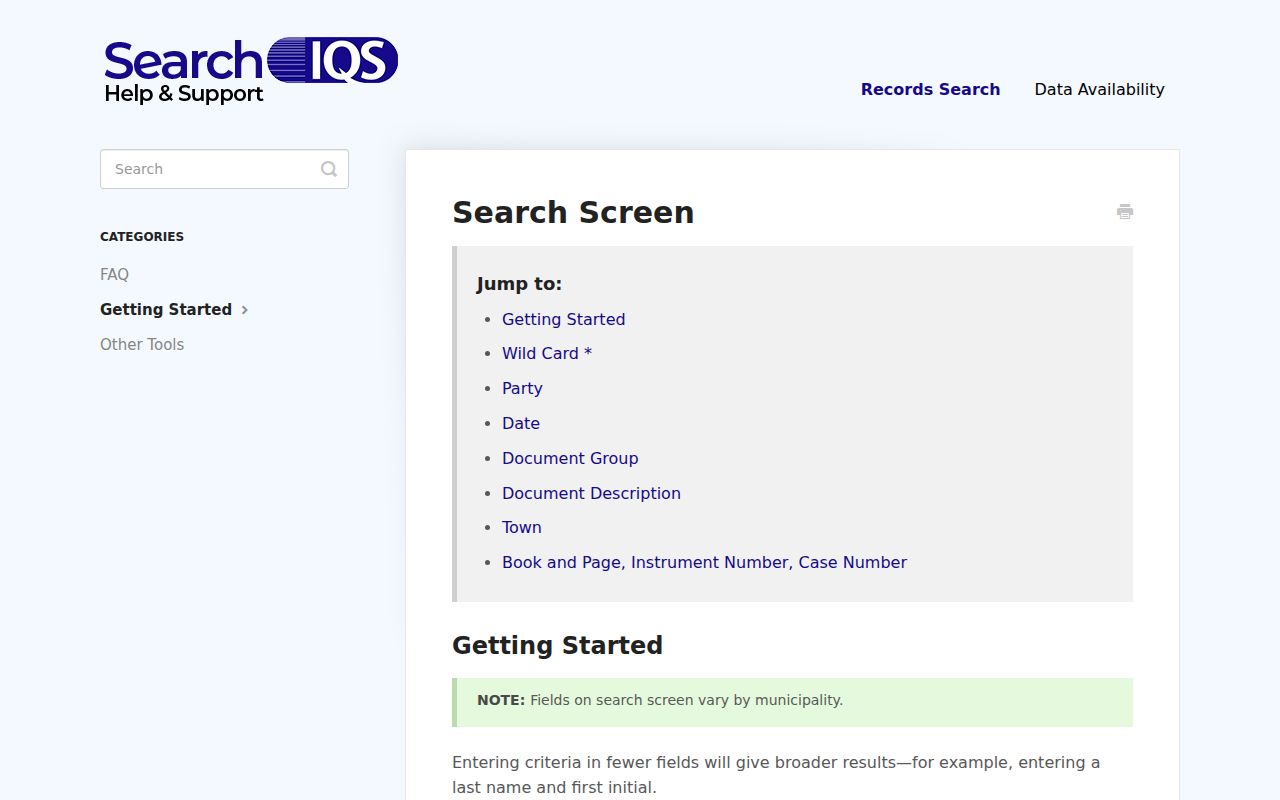
A deed index gives a recorded chain lead. It does not list every household that used a house.
Naugatuck Old House Research
The Connecticut State Library Old House Research guide recommends a sequence that fits a Naugatuck parcel: current deed chain, maps, assessment, directories, newspapers, photographs, architectural survey, and local-history sources. The guide is useful for previous residents research because it treats a house as a place with several record trails, not as a name-search result.
Howard Whittemore Library and the Naugatuck Historical Society supply local help. The society names picture files, yearbooks, city directories, manuscripts, and family-history material. The library points to newspapers, genealogy, Connecticut history, and online resources. The FamilySearch Naugatuck catalog is another finding aid, not a guarantee that an image is open. Ask for the street, approximate year, and source type; a staff member may know a shelf or local label that a broad catalog search misses.
The Connecticut Old House Research guide is shown in this house-history capture and gives previous residents research a source sequence.
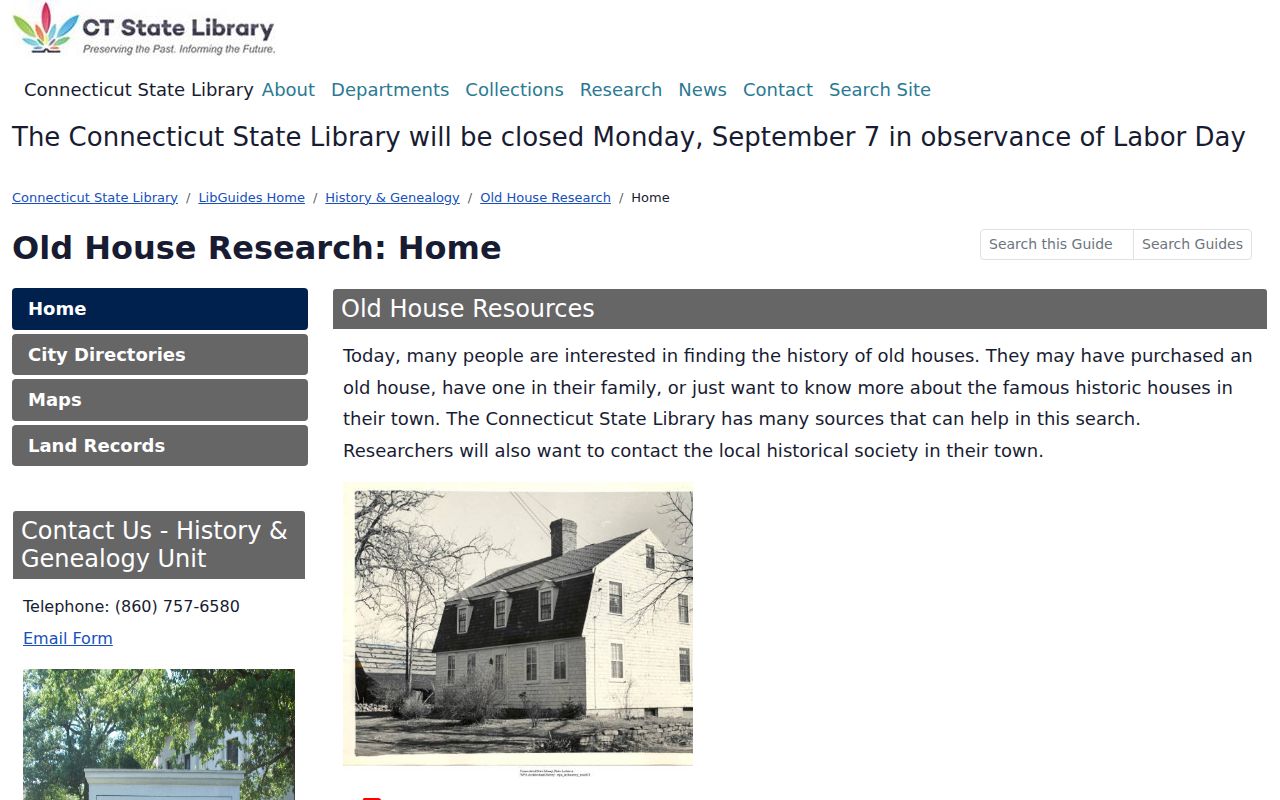
A house-history source can suggest the next archive, but each person and address still needs its own dated check.
Naugatuck Map And Parcel History
Naugatuck’s map record reaches back farther than the online land index. A previous residents search can use that older geography to generate a lead, but SearchIQS identifies maps from 04/26/1854 forward, while the Library of Congress 1856 New Haven County map includes an ancillary Naugatuck map and landowner context. Those maps are historical geography, not current parcel authority. Use them to generate an old name, road, owner, or landmark clue, then return to a recorded map, deed, or modern GIS key.
Current GIS aerial layers from 2005, 2012, 2017, 2020, 2022, and 2023 can show visual change. Grand List sales layers for 2021-2025 are a different kind of record. Label whether an observation is visual, recorded, or interpretive. Do not assume that a present parcel boundary or street name existed unchanged in 1856.
One useful bridge is the MBL. Start with the current parcel, compare the property-card owner and location fields, inspect CAMA or mailing data, then carry the MBL or legal description into a deed or map search. A historic directory or newspaper can be added after the place is anchored. This order makes it less likely that an old map name will be mistaken for a current street or that two parcels will be merged because their names look alike.
Union City, former mill areas, the Naugatuck River, and historic districts are useful search terms when a source describes place instead of a modern USPS address.
The Library of Congress Sanborn map guide is the source shown in this map-reading capture.
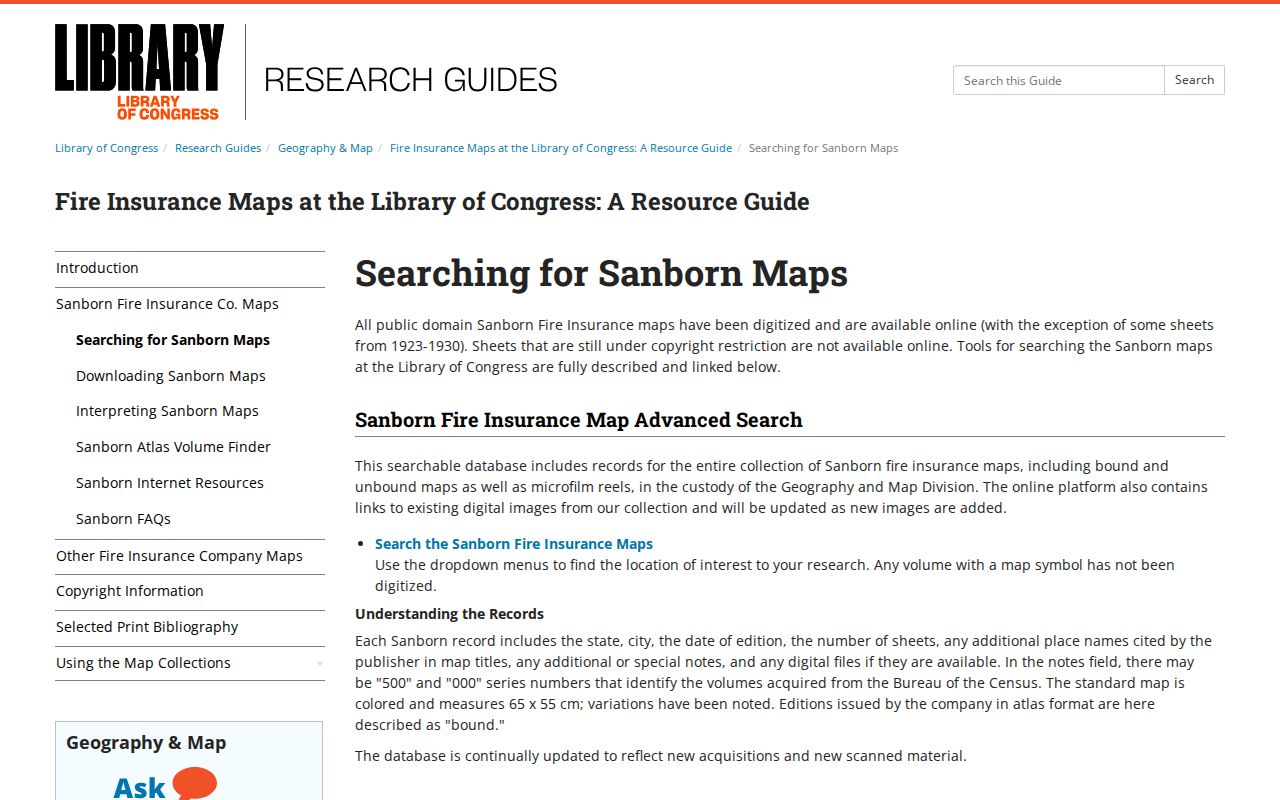
Sanborn guidance can help interpret an old map sheet, but the sheet remains historical context until a deed, parcel, or directory source connects it to the address.
Naugatuck Directory Years
The directory layer supplies dated household clues for previous residents. The Library of Congress Waterbury telephone reel includes Naugatuck in 1928-1934. The National Archives Waterbury holdings include Naugatuck in 1929-1932. Search the Naugatuck locality page inside each reel. The Naugatuck Historical Society confirms city directories among its holdings, but no complete publisher and year list was posted.
A directory name-to-address search can find a person. A street or criss-cross section can move from a house back to a listed contact when the edition includes that format. Record the year, page, surname, given name, address, telephone or business notation, and abbreviation key. The historical directory collection itself is explained on the Naugatuck city directory page; this page uses the collection to walk backward from one address.
- Write the street string and house number exactly as the historical source prints them.
- Search the closest directory edition by address, then read the name-to-address or criss-cross section if available.
- Pair the directory year with a matching census or newspaper year and compare household members, not just a surname.
- Record the edition, page, abbreviation key, and source location before moving to the next year.
A missing name may mean a move, death, omission, spelling difference, or missing edition. It does not prove a household left for a specific reason.
Naugatuck Newspapers And Obituaries
The Naugatuck Daily News lead covers 1895-1999 in the Library of Congress record, with holdings at the Connecticut State Library and Howard Whittemore Library. Waterbury regional newspapers may carry Naugatuck notices as well. A newspaper can connect a name to a death date, relative, street, civic event, move, or business without giving the legal detail of a vital or deed record.
Use the notice as a lead. Save the title, issue date, page, and exact family wording. Then seek an eligible death or marriage copy, probate case, cemetery source, deed, or directory entry. No official complete Naugatuck obituary index or funeral archive search was located, so the library and archive fallback matters.
For previous residents, an obituary can close one household chapter while opening another address or relative trail. Keep the conclusion matched to the source: a notice can report a relationship or event without proving every place where someone lived.
Naugatuck Probate And Heir Leads
Probate District 21 serves Naugatuck, Beacon Falls, Middlebury, and Prospect. Its public lookup can search district, case type, status, surname, and given name. A case number and filing date can connect a person to an estate trail. The public result is not a complete file, and a fiduciary or attorney field does not by itself establish every heir or property transfer.
For a family or heir question, connect the probate lead with the deed chain, death record, newspaper notice, cemetery or State Library guide, and unclaimed-property search. The Office of the State Treasurer’s CT Big Match route can be a separate claim lead. Each source has its own eligibility and current-interface rules.
Keep the purpose historical or estate-focused, and do not turn an estate clue into a current profile of a living person. Previous residents may be named in a probate record, but the public case screen is still only one step toward the file.
Naugatuck Address Name Changes
Address history can fail at the vocabulary level. Naugatuck is described in official navigation as both a borough and a town, and Town Clerk and Borough Clerk routes are distinct. Union City can appear as a historic or neighborhood label. A Waterbury directory reel can contain Naugatuck pages. A map can use a mill, village, road, or landowner label rather than a modern postal address.
Keep the old string beside the normalized one. Preserve directional prefixes, numbered streets, suffixes, unit identifiers, PO Boxes, location fields, and mailing fields. Test the old label in a map, directory, newspaper, deed, and library catalog before deciding that a name is missing. The MBL is often more stable than a person’s name or a postal abbreviation.
Note: A modern street match is a hypothesis until a map, deed, directory, or dated civic record joins it to the historic address.
Past Naugatuck Households
Previous residents are best understood as dated entries along a place, not as a single list. Owners appear in deeds. Subscribers or household contacts appear in directories. Relatives may appear in newspapers, vital records, probate, or cemetery material. The chain becomes persuasive when two or more sources agree on address, year, and identity without overclaiming what the record cannot show.
Use a short research note for every link: source, date, page or instrument, name as printed, address form, and the fact supported. A century-old entry can support family history. It cannot support a claim about a current person without a current, lawful, independently verified record. Previous residents remain historical entries until a current source says otherwise.
House-history use. Research past households for genealogy, preservation, local history, and estate work. Do not use a previous-resident trail to stalk, harass, threaten, or harm anyone.
Recheck live portals and ask the Naugatuck Town Clerk, library, Historical Society, Probate District 21, or State Library when an older volume or deed book is not online.